I couldn’t begin writing this. I sat in front of the keyboard again and again, and walked away again and again. I have been writing about human rights for a long time—from battlefields to refugee camps, from stories of impunity to narratives of silent torture. But I came to a halt at Ramisa’s incident—my eyes are welling up, my hands are trembling.
A Horrifying Morning
Seven years. She was just seven years old — a little girl in second grade at Popular Model High School.
A multi-story residential building in Pallabi, Dhaka. Ten-thirty in the morning. Her mother was looking for Ramisa to send her to school with her sister—but Ramisa was nowhere. Not at home, not on the stairs, not anywhere nearby. The search begins. With time, the mother grows anxious; neighbors are running around. Then eyes stop at the door of the adjacent flat—a tiny sandal. Just one. As if quietly saying it, she went this way.
Ramisa’s mother knocks on the door. No response from inside. The door closed.
The police arrive. After a long time, the door is opened. And then what is seen — I cannot fully describe it in this writing. A small, lifeless body under the bed. Her head in the bathroom. A mother faced with her little daughter’s body in two pieces.
Can you imagine this scene? I cannot. I have read, written, and witnessed human rights violations on the ground for years — but I don’t have the courage to stand before this mother.
Who Is the Perpetrator, and How Did He Get Here
Zakir Hossain alias Sohel Rana, age 30. By profession a rickshaw mechanic. He has a case against him under the Anti-Terrorism Act in Natore. Having served jail time in that case, just two months ago he rented a flat in that building in Pallabi along with his wife Swapna — in the flat directly opposite Ramisa’s family. Ramisa’s family has been living there for 17 years.
Here is my first question: A person accused under the Anti-Terrorism Act gets bail and comes to the capital without any surveillance and starts living — who bears the responsibility for this failure? Where does his previous case stand in the judicial process? Without answers to these questions, we cannot understand where the roots of this tragedy lie.
DMP’s Additional Commissioner S. N. Nazrul Islam stated at a press conference that it is preliminarily believed the child was subjected to perverted sexual behavior. Ramisa was killed by suffocation out of fear of bleeding or the incident being discovered. Thereafter, in order to disappear the body, her head was severed separately. Police have said the full truth will emerge after the autopsy and chemical report.
And Swapna? She was not merely a silent spectator. By not opening the door at the mother’s call, she gave her husband time to escape. After Zakir escaped by cutting the window grill, Swapna opened the door. According to police, she is an active accomplice in this murder. When Ramisa’s mother was knocking on the door, the incident was still ongoing inside. Zakir, who had fled, was however arrested by police later from a shop in Narayanganj — within just 7 hours of the incident.
Through Swapna, police have learned that Zakir is a person of perverted sexual nature and that he had been torturing his own wife for a long time.
A seven-year-old child. A second-grade student at Popular School. Gone like this!
The Culture of Impunity: A Structural Crisis
This incident is not an isolated accident. It is the manifestation of a deep-rooted rot in Bangladesh’s child protection system.
First, the weakness of the bail system. How a person accused of sexual offenses or child abuse gets bail and starts living in the city without tracking his identity or location — this is a grave administrative failure. In developed countries, registration of sex offenders is mandatory. In Bangladesh, this system is practically absent.
Second, the slow pace of the judicial process. In cases of child rape and murder, the Nari o Shishu Nirjatan Daman Act 2000 provides for the death penalty. But how quickly does justice come? In most cases, cases drag on for years. Delayed justice means virtual impunity.
Third, the lack of community surveillance. A known offender comes and settles in a residential area — no one knows, no one is alerted. Due to the absence of community-based protection frameworks, children are continuously at risk.
Fourth, the deficit in investment in child protection. According to UNICEF data, only a small fraction of child abuse incidents in Bangladesh are documented. Reporting mechanisms are weak, families are afraid to file complaints due to social pressure, and institutional support is inadequate.
Look at Ramisa’s Face
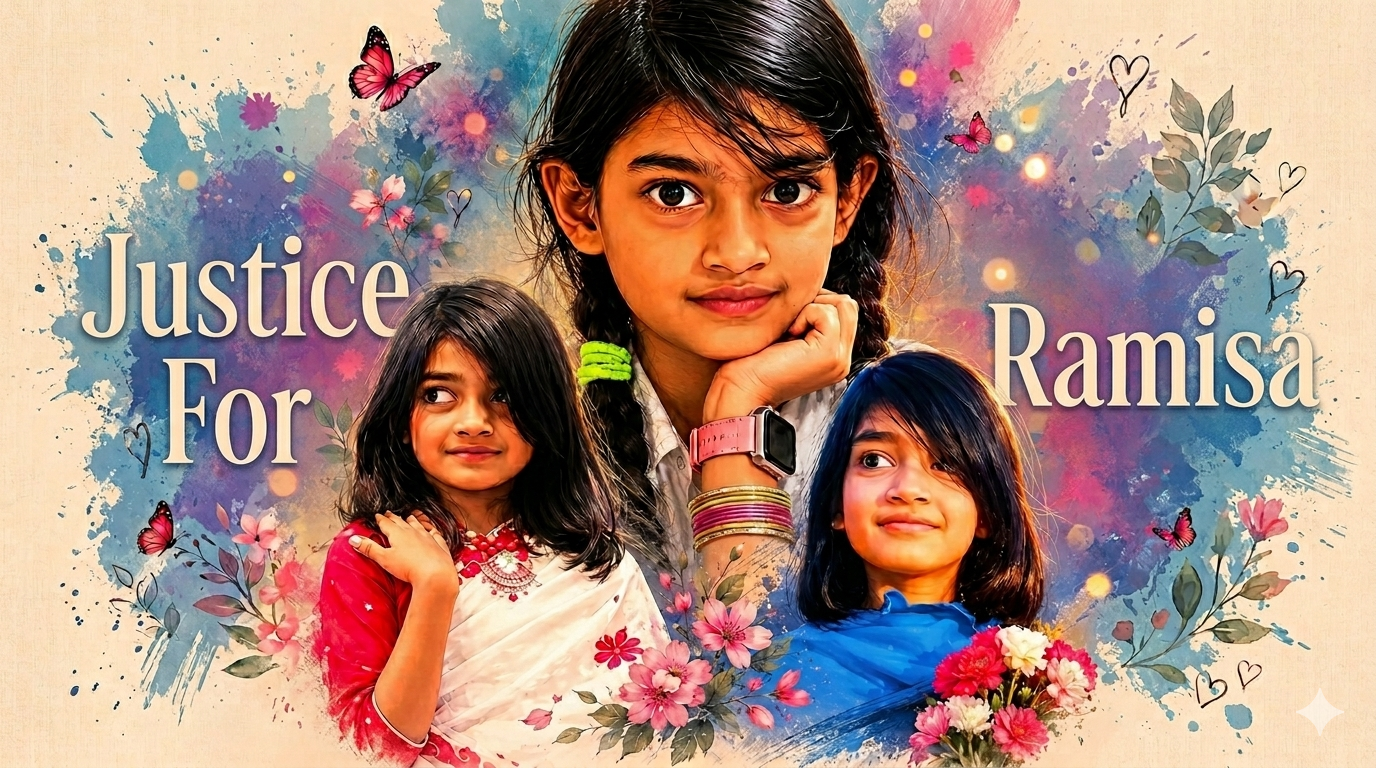
I will make just one request to my colleagues, readers, and anyone reading this piece — think of Ramisa’s face once. A seven-year-old girl — a second-grade student.
With a school bag on her shoulder, wearing small shoes, she used to go to school every day holding her sister’s hand. She had a dream. She had a future.
We could not protect it.
Simply protesting and posting a status and stopping is not enough. True justice for Ramisa does not mean only punishment for Zakir — it means building a system where no other child faces this fate.
What We Can Do — Right Now
Expressing grief is necessary, but not enough. We need active steps:
- Raise demands for legal reform: Pressure members of parliament to demand the introduction of a national database and mandatory registration for sex offenders.
- Child safety awareness: In your residential area, at your child’s school — who is a stranger, who is suspicious — stay alert to these things and make others aware too.
- Talk to children: Teach ‘Good touch, bad touch.’ Tell children to immediately inform trusted adults in any uncomfortable situation.
- Hold media and society accountable: Make sure these incidents do not get lost as one-day news. Maintain the pressure.
- Support relevant organizations: Support organizations working on child rights with time, voice, or resources.
A Father’s Silent Surrender: The Words That Pierce the Heart
Ramisa’s father has said — “I don’t want justice. Who will I ask for justice? You cannot deliver justice. At most 15 days, 1 month — everyone will forget everything. So I don’t want justice from anyone.”
After reading these words, I sat in silence for a long time.
A father — whose child was taken from before his eyes, whose daughter was cut into two pieces — is not asking for justice. Not in anger, not in madness. This is a deep, silent giving up. This is the moment a person loses all faith in the state.
And the most heartbreaking truth is — he is not lying.
We know what happens in this country. The murder of Sagar-Runi has gone unjustified. The murder of Tonu has gone unjustified. How many Ramisas have come before, how many have been printed in newspapers, how many candles have been lit — and then silence. This father knows that cycle. This father knows that his daughter’s face will disappear from the trends two weeks later, be wiped from the newsfeed, and the case file will gather dust somewhere.
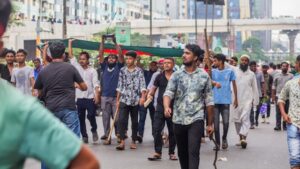
Ramisa’s father’s tired, broken voice reminds me — if our anger, our statuses, our candlelight marches bring no structural change, then every protest ultimately proves this father’s despair to be true.
So this writing is not only for Ramisa. This writing is also for that father — who has even forgotten how to ask for justice.
Conclusion: Justice Is Not Only Punishment
Zakir may perhaps get bail again. Even writing this possibility feels like a stone pressing on the chest. But fighting against this fear is our responsibility — as writers, as citizens, as human beings.
Ramisa is no more. It is not possible to bring her back. But if her death brings any change in this country’s child protection system — if even one law is amended, one structure is strengthened, one child survives — then perhaps our anger, our grief, will find some meaning.
May the little pair of footsteps lost on that staircase in Pallabi remind our conscience every day — we have still not done enough.
This article has been written for the purpose of raising awareness in the protection of children’s rights. Deep condolences are expressed to the families of child abuse victims in Bangladesh.